A Santri, A Concern, and A Book: The Journey of An-Nahwu Al-Kafi
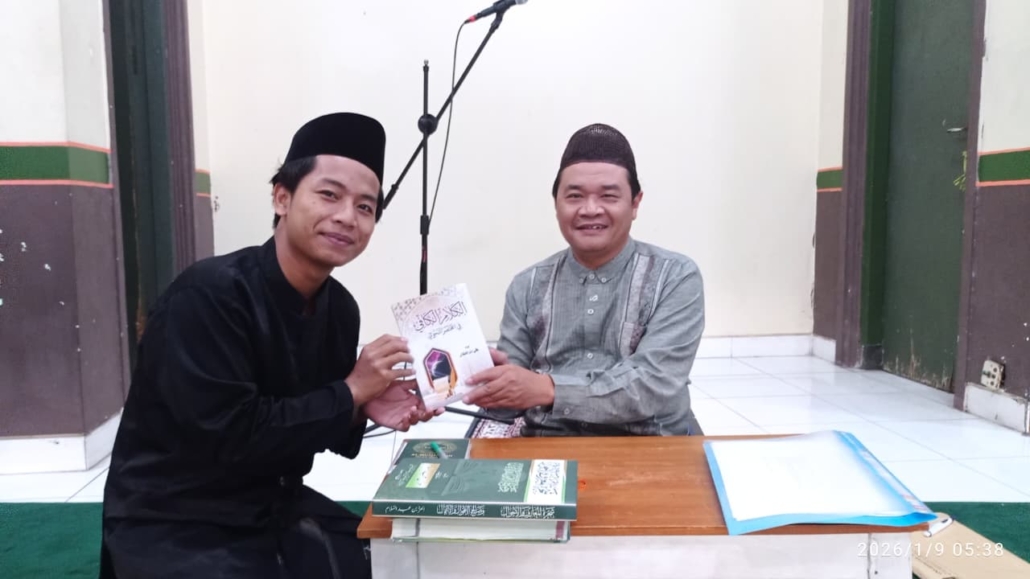
What began as a simple concern for fellow students struggling to understand Arabic grammar has grown into a published book. Riky Zulfikar, a santri of Pesantren UII and a student of Islamic Family Law at Universitas Islam Indonesia, has written النحو الكافي (An-Nahwu Al-Kafi), an Arabic grammar guide aimed at helping students grasp the fundamentals of nahwu more easily.
Riky began writing the book in August 2024 while he was still in his third year of Madrasah Aliyah (MA). The idea gradually emerged from his experience teaching nahwu to younger students at the pesantren. Using the same materials he had once studied with his seniors, he tried to guide new students through the lessons. Over time, however, he realized that teaching Arabic grammar was not as easy as it seemed. Many students still struggled to understand the subject.
This experience sparked his desire to create a simpler reference that could help them learn more effectively. At first, Riky only intended to compile a short summary that could serve as a guide for his younger peers. Yet as the notes continued to grow, he began to see the potential for something more. What started as a personal teaching aid gradually developed into a more structured manuscript.
In preparing the material, Riky compiled key concepts from classical texts such as Al-Jurumiyah, Al-Imriti, and Alfiyah Ibn Malik. These references were then presented in a simpler and more accessible form, supported by clear explanations and practical examples. Some examples were drawn from the Qur’an and hadith, allowing readers not only to learn the grammatical rules but also to see how they appear in authentic Islamic texts.
Writing the book required persistence and careful time management. Life in the pesantren follows a disciplined daily rhythm filled with studying, reciting classical texts, and teaching younger students. In the midst of these responsibilities, Riky tried to make use of every spare moment to continue writing his manuscript.
“When there was free study time, I used it to write,” he recalled. “At night, after the lessons had finished, I would continue working on the book.”
The journey, however, was not without challenges. Balancing time between studying, teaching, and writing often left Riky worried that he might fall behind in his own lessons. Writing the book also demanded careful attention to language and examples. He wanted each explanation to be clear and easy to understand while still drawing from authoritative sources such as the Qur’an, hadith, and classical verses commonly used in Arabic grammar studies.
For Riky, the pesantren environment played an important role in helping him complete the work. Surrounded by a community dedicated to learning, he found encouragement in the daily atmosphere of study and discussion. Watching fellow students immerse themselves in their lessons motivated him to remain consistent in his writing.
After months of compiling and refining the material, Riky completed the manuscript on March 20, 2025, coinciding with his graduation day. Later, he continued editing and preparing the manuscript in digital form until it was finally ready for publication.
Looking back on the long journey that began with simple teaching notes for his fellow students, Riky hopes that An-Nahwu Al-Kafi will benefit many learners. “I hope this book can help people who want to learn nahwu and understand Islamic knowledge better,” he said. For him, the book is a small contribution that may help others appreciate the language of the Qur’an and deepen their understanding of religious texts. (ZNA)


Leave a Reply
Want to join the discussion?Feel free to contribute!